Making an “Iron Range” Potica using a Bread Machine
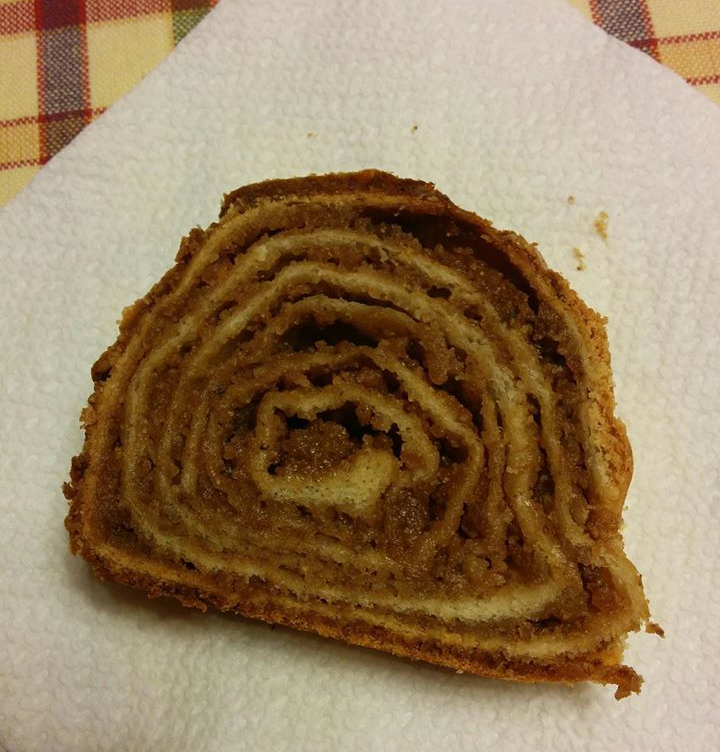
Making Potica, the traditional Minnesota Iron Range way, is a day labor of mixing, rising, stretching and baking. And at the end, each time, I truly feel I have conquered a baking masterpiece. However, apart from the holidays, it would also be fun to make a Potica on a lesser scale, maybe even play with some of the other classical fillings, such as pecan or poppy seed. I decided to trim my traditional recipe in half. And since I was looking for ease and experimentation, I would use a bread machine to make the dough. The dough was a success. It requires the extra proofing, but not having the floury mess and cleanup, allowed me time for other projects while the dough was rising. Plus, I had less dough to roll and stretch.
With only half the amount of dough on my table, I was able to stretch the dough very thin. In fact, I was able to stretch it out an extra 8″ widthwise. Although I was proud of my dough stretching abilities, there was not enough filling to keep the Potica as moist as the traditional bake. I realized that the area of dough of my traditional Potica is 36 x 60 inches. Since I divided my recipe, I needed to keep to a 30 x 36 inch rectangle, and forego the extra inches. The Potica was still delicious, but next time I will try not to get carried away with challenge of making super ultra thin dough!
Potica (using dough cycle on bread machine)
Potica Dough:
4 c. all purpose flour
1/4 c. butter, softened
3/4 tsp salt
1/4 c. sugar
3/8 c. water
3/4 c. milk
2 eggs (beaten)
2 1/4 tsp yeast
1 tsp rum extract
Add the wet ingredients to the bread machine first. Next, add the salt and flour. Sprinkle the yeast on top of the flour. Set the bread maker on dough cycle and start the machine. Check to make sure all ingredients have incorporated nicely together and that dough is not too dry or sticky. After dough cycle is complete, gently turn the dough out onto a cutting board. Remove the paddle from dough and punch down to remove air. Place the dough in a oiled bowl and cover with a towel. Place the covered bowl in a non drafty area and allow to rise until doubled. While dough is rising, prepare the walnut filling.
Walnut filling:
1 pounds walnuts (ground fine with food processor)
1/4 c. milk
3/4 c. whipping cream
1/4 c. butter
1 eggs (beaten)
1/3 c. honey
1/3 c. sugar
1/3 c. brown sugar
1 1/2 tsp cinnamon
1 tsp rum extract
1/2 T lemon juice
In large bowl, toss ground walnuts with cinnamon. Mix in one beaten egg and milk. In saucepan, heat butter, cream, honey and sugars until rolling boil. Remove from heat and stir in lemon juice and rum extract. Stir warm mixture into ground walnut mixture. Set aside.
To form Potica:
Place clean sheet on table and cover with dusting of flour. Place the dough in the center of the table. Roll into a 9 x 13 inch rectangle.
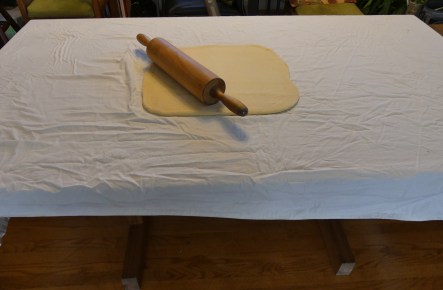
Place your hands under the dough palms up. Lift the dough up several inches and begin pulling it towards you with your fingertips. Carefully stretch it out, trying not to tear the dough, lifting and pulling until it is evenly thin and transparent, about 30″ x 36″.


Spread with walnut filling leaving a 1/2″ margin.

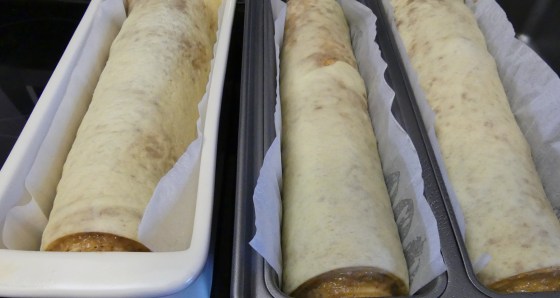
Starting on the long edge, roll the filled dough in jelly roll fashion. Once the roll has started, you may use the sheet to lift dough and to keep the dough rolling evenly until one long jelly roll-like length is formed. Cut into approximately three, 10″ pieces, or to fit your available baking pans.


Line the pans with parchment and place rolled dough in pan. Allow the Potica to raise for at least 60 minutes or until doubled.
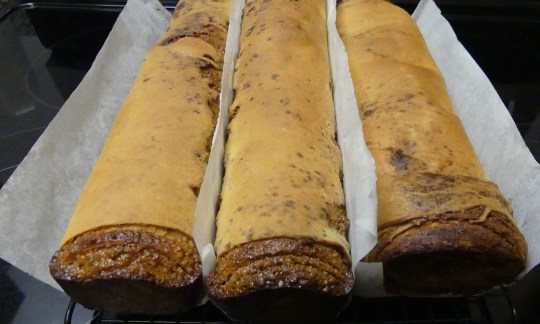
Bake at 325° F for 40-45 minutes or until golden brown. Cool before cutting into 1/2′ slices for serving. Enjoy!
 Sunny Diversions
30×36. You are gutsy, daring, fun, and soooo good at this. Beautiful instructions Janice!
LikeLike
Rather than cut into loaves, I like to roll the entire rolled up potica into a coil and bake on a cookie sheet.
LikeLike
My husband is Slovenian and potica is a staple for the holidays. With his parents being gone I took over the task of making it for him. Your recipe is gorgeous and I have relied on your instruction for the last couple of years. It turns out perfect every time. Thank you so much for sharing! Happy Easter🐰💐
LikeLike
Thank you for the kind comment. I am so glad this recipe works well for your family. I love making potica the traditional way as well, but this does work so well, especially since we are a smaller family.
LikeLike